Title:
Intelligent Microsurgical Robotics
Abstract:
Microscopic surgical robots represent an integrated advancement in
precision surgery and intelligent control. They assist surgeons in
a variety of microsurgical procedures by enabling highly accurate,
dexterous, and standardized operations, and constitute a
significant branch of medical surgical robotics. Focusing on
microscopic ophthalmic surgery, this lecture reviews the
historical development and leading advances in the field, and
describes how innovations in surgical microscopes and instruments
have catalyzed progress. The next generation of microscopic
ophthalmic surgical robots is characterized by greater operational
autonomy and flexibility, higher control precision, more
comprehensive assistive functions, and improved postoperative
feedback. The talk details several key enabling technologies,
including the development of intelligent surgical instruments,
intraoperative real‑time multimodal navigation methods, robotic
intelligent control strategies, and automated surgical assessment.
The lecture concludes with an outlook on future opportunities and
challenges for microscopic ophthalmic surgical robotics.
Biography:
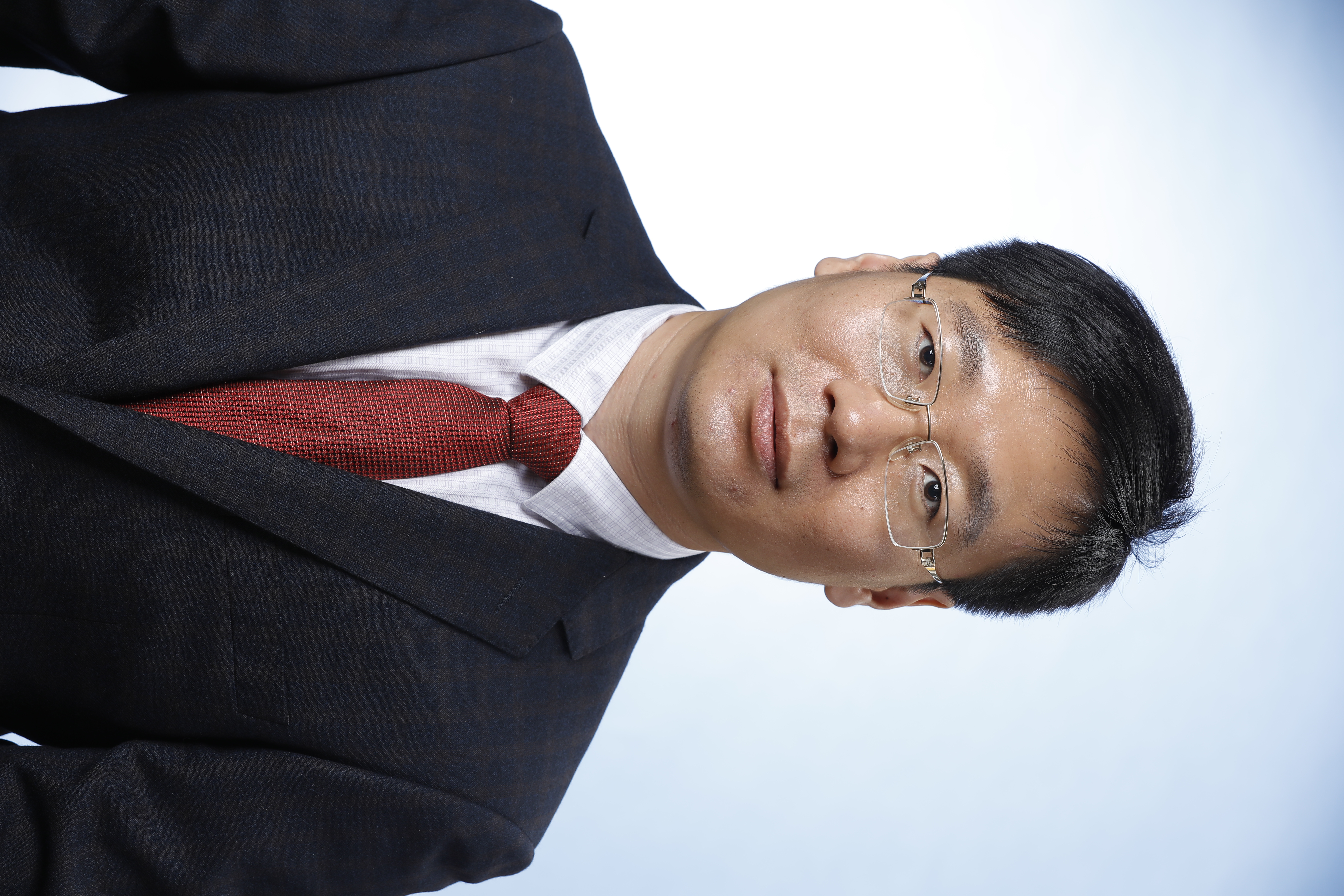
Gui-Bin Bian is a Professor at the Institute of Automation,
Chinese Academy of Sciences. His research focuses on intelligent
surgical robotics. He has led projects including a National Key
R&D Program, the National Natural Science Foundation’s Major
Scientific Instrument Development project, joint foundation
projects, and an Innovation & Interdisciplinary Team project of
the Chinese Academy of Sciences. He has authored over 190
high‑quality academic papers, 99 of which are indexed by SCI, and
received seven international paper awards. He holds 72 granted
domestic and international invention patents and participated in
drafting one national standard. His honors include the First Prize
of the China Instrument and Control Society’s Technological
Invention Award, the First Prize of the China Invention
Association’s Invention & Innovation Award, the
“Strengthening‑Nation Young Scientist” nomination from the
Communist Youth League and China Youth Daily, and the Robot
Science Leading Award. He serves on expert panels for the 14th
Five‑Year National Key R&D Program (Special Projects on
“Fundamental Research Infrastructure and Major Scientific
Instruments and Equipment Development” and “Intelligent
Robotics”), and is a member of the expert working group for the AI
domain guideline of the “Strategic Science & Technology Innovation
Cooperation” key program. He is President of the Chinese Academy
of Sciences Youth Innovation Promotion Association, a member of
the Academic Committee of the PLA Key Laboratory for Combat Injury
Specialized Treatment, and an editorial board member of IEEE
Transactions on Instrumentation and Measurement (TIM), IEEE
Transactions on Automation Science and Engineering (TASE), and The
Innovation. He has been recognized as National Distinguished Young
Scholar, Outstanding Member of the CAS Youth Innovation Promotion
Association, Beijing Outstanding Young Scientist, and Beijing
Science & Technology Rising Star.
